STS WINTER SCHOOL
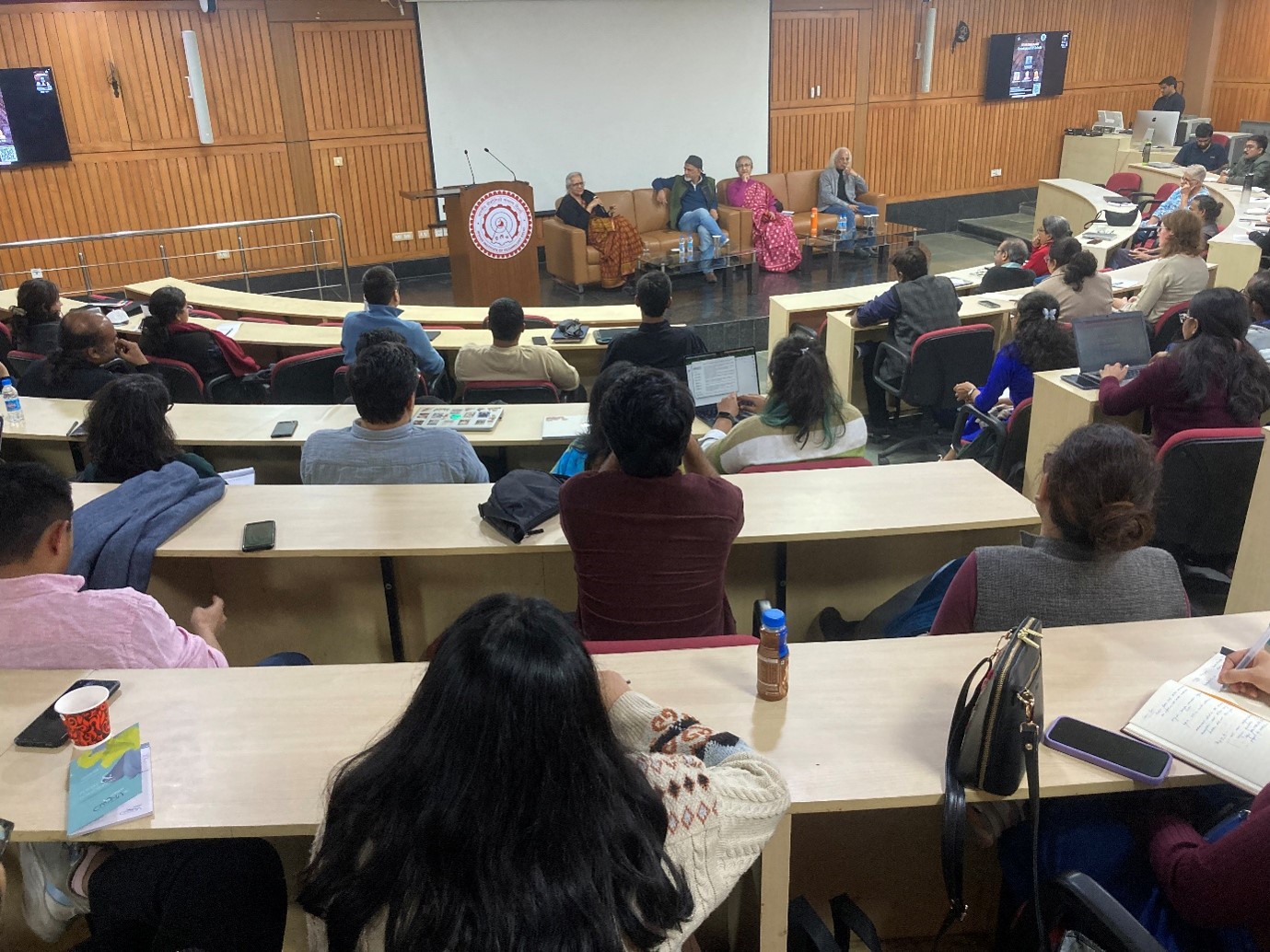
The precursor to the conference was the STS Winter School, held at the Sonipat Campus of IIT Delhi from 12-14 December, which brought together scholars from across India for a three-day workshop. The sessions were highly interactive, creating space for participants not only to learn and reflect on STS in India, but also to think with STS. Designed to combine conceptual engagement with practical training, the programme included sessions on digital humanities, working with large data models, and exploring ways in which STS scholarship can engage audiences beyond academia.
The Winter School concluded with the STS-IN Dialogue, “Genealogies of STS in India,” featuring distinguished speakers such as Dunu Roy, Usha Ramanathan, and Professor Rajeswari Raina. Reflecting on their intellectual trajectories, they offered rich historical accounts of navigating both academic and practice-oriented worlds across fields including sociology, law, the development sector, and agricultural economics. Drawing on decades of experience, they shared insights into the evolving landscape of STS in India and the lessons they had learned along the way. The Winter School underscored the importance of asking critical—and sometimes uncomfortable—questions within one’s own discipline, embracing the need to unlearn through practice, and fostering collaborative work across disciplinary boundaries.
STS-IN CONFERENCE
At the O.P. Jindal Global University, an ambitious series of sessions marked preliminary steps towards consolidating a field—one concerned with articulating what it meant to do STS from and within India. Titled ‘Co-shaping Science, Technology, and Society in India', the conference explored how processes of co-production take shape in a country where biometric systems, gig platforms, energy transitions, AI automation and postcolonial epistemologies intersect in both scholarly discourse and everyday life.
DAY 1: Knowledge, Democracy, and an Expansive Technoscape
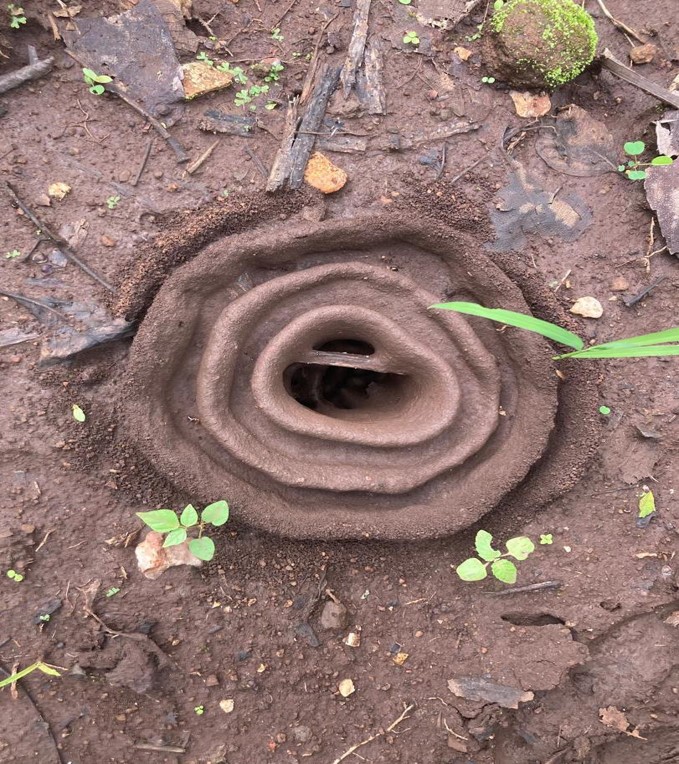
The conference opened with reflections from STS-India Network national coordinators Naveen Thayyil and Vidya Subramanian, who issued a timely call to cultivate STS as a scholarly field and a practice of community-building. They framed the conference itself as an experiment in knowledge-making and institutional collaboration, an idea that resonated with the conference title and was further elegantly expressed through its visual motif: an anthill from the forests of an Indian tiger reserve.
Scholarship on distributed labour and collective intelligence emerged as a recurring thread throughout the day: the accumulation of small, often invisible actions that produce complex structures, alongside a vision of scholarship rooted in community rather than individual prominence, aptly invoking the motif of ant colonies. This orientation echoed across the subsequent concurrent panels on digital infrastructure, AI data supply chains, and India’s digital public infrastructures.
Panels on agroecological transitions and environmental governance traced the politics of natural farming and millet revival, foregrounding grassroots leaders and civil society collaborators. Panels on technologies of the body and feminist critiques of STEM highlighted how technoscience is experienced and negotiated through a gendered lens.
The opening day also featured a poster pitch session evaluated by international jurors Emma Kowal (Deakin University, Australia) and Ritwick Ghosh (North Carolina State University, USA). The posters remained on display throughout the conference, encouraging sustained engagement and informal exchanges. Across 12 sessions, discussions converged around environmental justice, visible and invisible labour, gendered bodies, and the social life of energy bureaucracies.
The evening plenary, held in memory of
J.P.S. Uberoi, traced the intellectual genealogies that have shaped critical scholarship on science and modernity from the vantage point of India and the Global South. Panellists reflected on Uberoi's work through concrete examples, personal recollections, and pedagogical practices, highlighting the intellectual processes behind his conceptual arguments.
DAY 2: Productive Disruptions and Building STS Infrastructure
The second day began with a roundtable on interdisciplinary pathways into STS, highlighting ethnography and other embodied research approaches. The presentations reflected the methodological diversity of STS engagements in India, spanning studies of fields such as fisheries, air pollution management, nuclear power plants, and artisanal practices.
Environmental politics remained a strong presence throughout the day, suggesting that environmental STS continues to emerge through distinct and evolving nodes of engagement rather than fixed boundaries. Discussions ranged from methane mitigation and uranium mining debates to desalination projects in India and the growth of urban waterscapes.
Contrary to a typical academic gathering, curated sessions focused on GLAM (Galleries, Libraries, Archives and Museums), STS in the Indian classroom, and conversations around publications and the co-creation of digital resources. These sessions had extremely engaged audiences and generated enthusiastic deliberation on building STS infrastructures through archives, mentorship networks, and collaborative avenues that could support research and teaching, while strengthening the field's institutional foundations.
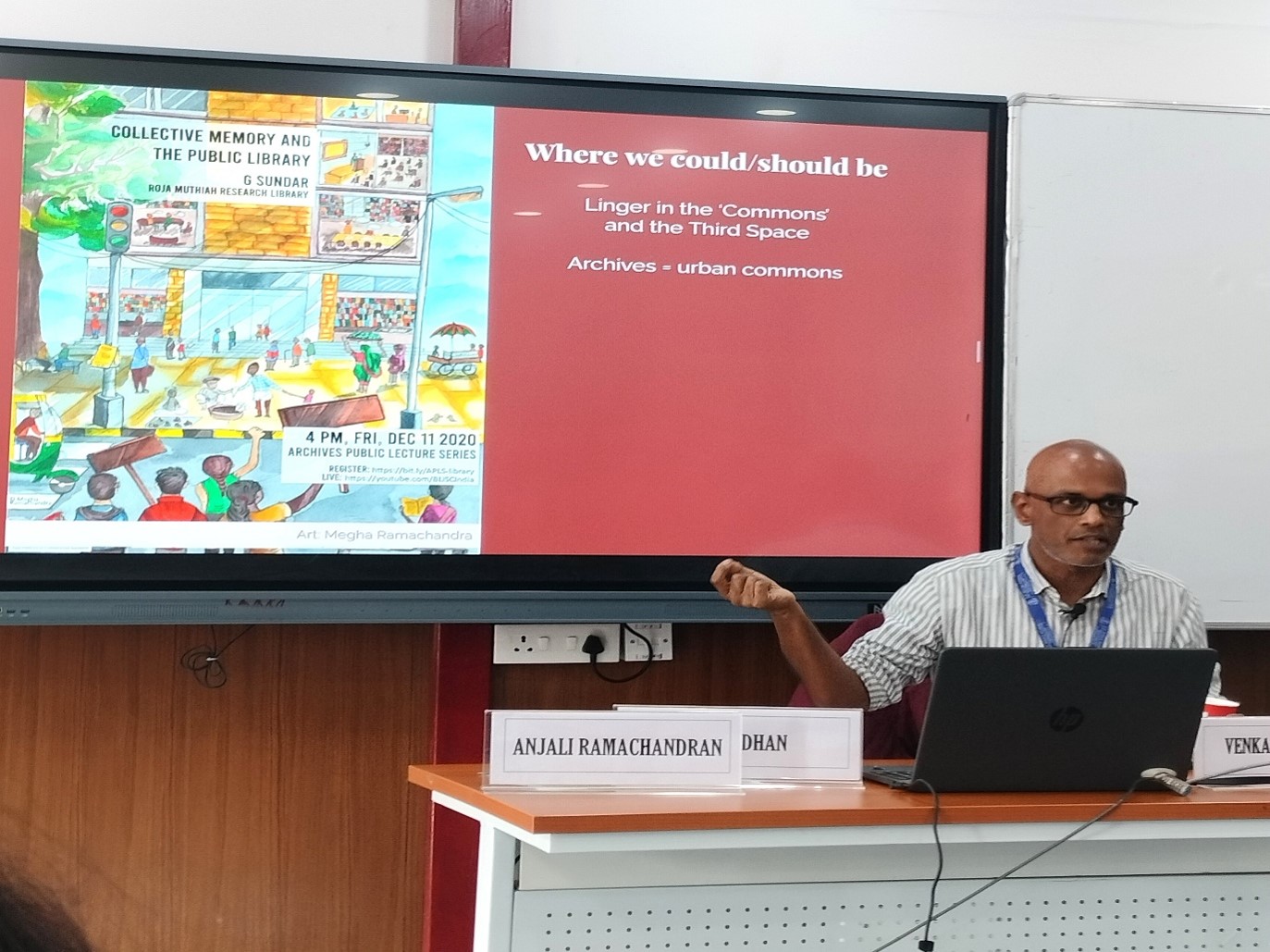
GLAM, pedagogy, and digital co-creation [Image Credits: Arpita Abraham]
The final day featured panels on techno environments in India, postcolonial feminist critiques, and emerging questions on AI governance. Environmental politics again remained central, with presentations addressing indigeneity, policy design, and the politics of environmental knowledge production.
A roundtable on ‘Decolonising STS’ invited participants to reflect critically on epistemic hierarchies, methodological assumptions and the dominant framework of knowledge production. Discussions emphasised the need to situate STS within a broader ecology of epistemes, challenging the persistent assumption that concepts emerge from the Global North while the Global South merely supplies empirical context. The discussion emphasised the importance of recognising a pluriverse of knowledge systems and celebrating diversity in ways of knowing, not only through the lens of ‘alternative’ sciences, but within the sciences themselves.
The concluding symposium turned to the future of STS-IN as a network. Participants discussed possibilities for strengthening collaboration and institutional presence, drawing inspiration from regional STS networks across the Pacific and Europe. Speakers underscored the importance of situated interventions, non-linear and non-binary approaches and being comfortable with a space of perpetual translation, across disciplines, contexts, and forms of knowledge.
A business session formalised commitments to sustaining the network through future conferences, workshops and new officeholders. By the end of the three days, the conference had moved beyond a series of presentations to articulate a collective vision for STS in India. Scholars and faculty volunteered to organise city chapters and reading groups across India and signed up to participate in the network, while proposals for conference proceedings were met with enthusiasm.
The first STS-IN conference thus marked a shift from dispersed scholarship and isolated conversations toward a more articulated and coordinated network that brings in a greater number of scholars into its ‘anthill.’ Conversations across these three days, interspersed with great food, numerous cups of coffee, and a vibrant scholarly ambience, served as a reminder that STS in India is fundamentally a collective project that demands care, sustained collaborations, and broad institutional imaginations.
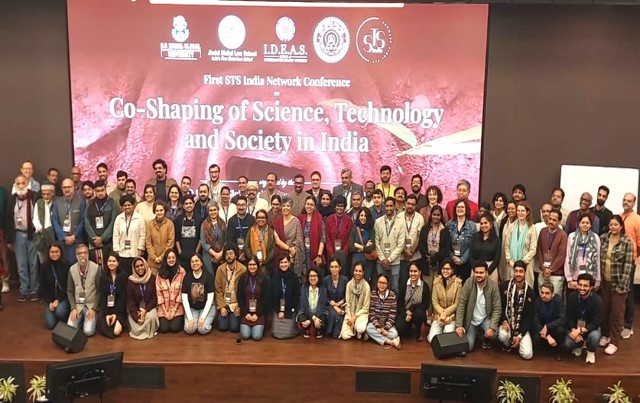 Co-Shaping of Science, Technology and Society in India [Image Credits: Yogita Suresh]
Mridul Surbhi (Philosophy BA, Social Anthropology MA) is a doctoral researcher at the Department of Humanities and Social Sciences, Indian Institute of Technology, Delhi. Her work focuses on Sowa Rigpa (Tibetan Medicine) in the Western Himalayas, examining knowledge transmission (using STS frameworks) and healing practices among Himalayan communities. Her research interests include STS, medical anthropology, Tibet and Himalayan studies.
Tilak Bhardwaj is doctoral candidate in the Science, Technology, and Society (STS) unit of the Department of Humanities and Social Sciences at the Indian Institute of Technology (IIT), Delhi. He completed his BA(Hons.) and MA in History at St. Stephen’s College, University of Delhi. His current dissertation examines railway accidents and safety standards in colonial India. More broadly, his research interests lie in the history of technology and infrastructure, and social histories of transport and communication.
Bharti Varun is a doctoral candidate in Sociology unit in the department of Humanities and Social Sciences (HSS), IIT Delhi. She has a B.A (Hons) in Political Science from I.P College for Women, University of Delhi, M.A in Social Work from Tata Institute of Social Sciences Mumbai. Her doctoral research examines the intersection of drone technology, embodied labour, and farmers’ knowledge, and explores how these are mediated, reconfigured, and transformed through technological interventions in agriculture.