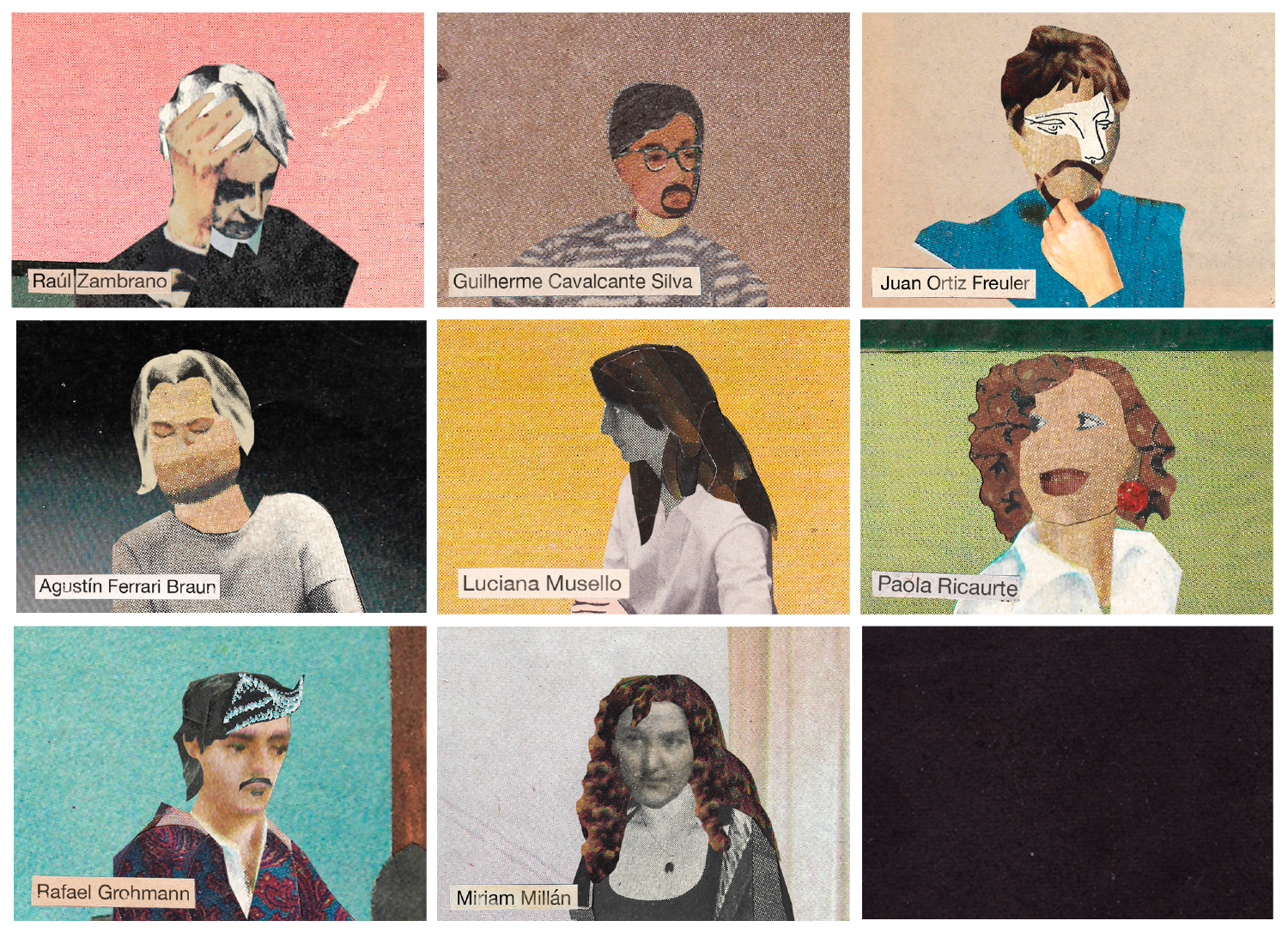
The group started through the efforts of Guilherme Cavalcante Silva and Juan Ortiz Freuler. Guilherme arrived at dependency theory thanks to his work on technological development and policy in Latin America. Juan came on board due to the parallels between the theory and the
Non-Aligned Tech Movement, an initiative for the technological self-determination of non-aligned countries (about which he has
previously written here). We meet online once a month to discuss texts proposed by the participants. I remember that during our first meeting, we discussed the scope of “dependency.”
Popularized in the 1960s and marginalized after the late 1970s, dependency theory argues that the economies of certain countries are conditioned by the growth and expansion of another economy to which they are subordinate. This is the definition given by Brazilian economist Theotonio Dos Santos in Imperialismo y Dependencia (
Imperialism and Dependency) (1978), a massive work of almost 600 pages that we reviewed in one session. Organized in a center-periphery scheme, the countries at the center define the conditions for growth, while the countries on the periphery grow only “as a reflection” of that expansion. The result for the latter is underdevelopment. Therefore, development and underdevelopment are two sides of the same coin.
Dependency relations can be observed in the unequal exchange between the center and the periphery, in the concentration of technology in the centers, and in the international division of labor, that is, in the role that each country plays in production processes. What was once a division between manufacturing countries and countries producing raw materials and agricultural products is now a division between countries that produce digital technologies and those that manufacture them or, in the worst-case scenario, constitute merely dependent users. This is the most recent phase of dependency described by Dos Santos: the technological monopoly of multinational corporations from dominant nations that perpetuates relations of domination and subordination.

“Dependency is a movie, not a photograph.” This is how Raúl Zambrano, an ICT policy advisor for almost 20 years at the UNDP and a living encyclopedia on dependency literature, explained it at a meeting. He was referring to the fact that centers are constantly shifting and peripheries readjust themselves according to those movements, a process that sometimes involves growth, but always in a subordinate manner.
In the group, we discussed several cases that illustrate this dynamic. At first glance,
Taiwan, a peripheral country that has become a successful global hardware manufacturing center, seems to defy the cycle of dependency. However, when we review the indicators, we see that the dominant economies continue to grow at a much faster rate in the same sector. In other words, the periphery is moving, but the center has already overtaken it. The case of
Mercado Libre, which we analyzed at Juan's suggestion, points in the same direction: although it is a leading platform in the region and develops advanced technological capabilities, it relies on Amazon Cloud to carry out these operations, unable to develop its own infrastructure.
This phenomenon is also reflected in labor arrangements of the new phase of dependency. In
Laboratories of Digital Economies: Latin America as a Site of Struggles and Experimentation, an article we read thanks to Guilherme's recommendation, Rafael Grohmann argues that centers use the periphery as a laboratory to test new forms of labor exploitation. According to Rafael, who accompanied us in that session, informal and precarious work, the norm in countries such as Brazil, has been exploited and reinforced by dominant digital platforms as the ideal labor arrangement to maximize capital accumulation. Rebranded as gig work, the model leaves the laboratory.
Data labeling for artificial intelligence is a good example of this process: an activity that connects periphery workers with the centers and incorporates them into the global value chain, but under working conditions that reproduce dependency. Ruy Mauro Marini, a thinker in the Marxist tradition of dependency whom
we read on another occasion, already had a name for it: super-exploitation, understood as the remuneration of the workforce below its value, the intensification of work, or the extension of the working day. This is a central feature of labor in dependent countries. Super-exploitation reduces the domestic market by restricting consumption and discouraging the transfer of technologies that could increase productivity. Yet another way of achieving accumulation.
Where to go then? For Dos Santos, dependent countries have two paths: maneuver within the alternatives allowed by their own situation of dependence, or change the situation qualitatively to open up new possibilities for action. In the group, we have explored both routes. In our most recent session, for example, Miriam Millán from the Center for Digital Culture in Mexico introduced anti-colonial and anti-imperialist criticism of technology as a strategy of resistance.
Referencing Frantz Fanon, we talked about the Algerian revolutionaries who appropriated the tools of the master, in this case radio, to put them at the service of their struggle. Something similar seems to be attempted by
Latam-GPT, a Latin American language model built on Meta's Llama 3, but designed to understand our context and respond to the needs of the region. Will that be enough?

For Paola Ricaurte, the Ecuadorian-Mexican thinker on technology and decoloniality, breaking free from dependency requires much more than replacing foreign actors with local ones. Her position is closer to Dos Santos' second path: the conditioning situation must be transformed. In the session in which we read her article
, "Data Epistemologies, the Coloniality of Power, and Resistance," Paola emphasized that a change in logic is required to allow us to think beyond development as a horizon.
This is the challenge that awaits us in January 2026, when the group resumes its meetings. Researcher Agustín Ferrari Braun will be selecting our discussion texts. We will address the issue of imperialism, both in its formulation within the dependency tradition and in its recent reappearance in certain European discourses on digital sovereignty. This is an invitation for you to join us. For more information, refer to
our shared doc. Please note that our meetings are held in Spanish.
_______________________________________________________________________
Luciana Musello is a Lecturer in Media and Communication at the University of San Francisco in Quito. She is currently researching the power dynamics linked to internet infrastructure in Ecuador
_______________________________________________________________________
Releer la dependencia: tecnología y poder en Latinoamérica
Los debates sobre la dependencia tecnológica en Latinoamérica están en plena efervescencia, y sin embargo, la
teoría de la dependencia ha sido prácticamente olvidada. En abril me uní a un grupo de lectura que se ha propuesto desempolvar los textos de los pensadores latinoamericanos que hace 50 años buscaron teorizar el desarrollo desigual en la región. Nuestro afán es releerlos a la luz de las dinámicas tecnológicas de esta década, en la que la relación centro-periferia parece seguir organizando el poder sobre las tecnologías digitales.

El grupo fue idea de Guilherme Cavalcante Silva y Juan Ortiz Freuler. Guilherme se acercó a los dependentistas por su trabajo sobre desarrollo y políticas tecnológicas en Latinoamérica. Juan llegó por los paralelos de la teoría con el Non Aligned Tech Movement, una iniciativa para la autodeterminación tecnológica de los países no-alineados, sobre la que ha escrito previamente aquí. Nos reunimos en línea una vez al mes para analizar los textos propuestos por alguno de los participantes. Recuerdo que en nuestro primer encuentro discutimos el alcance de la “dependencia”.
Popularizada en los sesentas y marginalizada a finales de los setenta, la teoría de la dependencia sostiene que la economía de ciertos países está condicionada por el crecimiento y expansión de otra economía, a la cual están subordinados. Esa es la definición del economista brasileño Theotonio Dos Santos en Imperialismo y Dependencia (1978), un macizo de casi 600 páginas que revisamos en una sesión. Organizados en un esquema de centro-periferia, los países del centro definen las condiciones de crecimiento, mientras que los países de la periferia crecen sólo “como reflejo” de esa expansión. El resultado para estos últimos es el subdesarrollo. Por eso, desarrollo y subdesarrollo son dos caras de la misma moneda.
Las relaciones de dependencia se pueden observar en el intercambio desigual entre centro y periferia, en la concentración de la tecnología en los centros y en la división internacional del trabajo, es decir, en el rol que ocupa cada país en los procesos de producción. Lo que alguna vez fue una división entre los países manufactureros y los países productores de materias primas y productos agrícolas, hoy es una división entre los países productores de tecnologías digitales y los países que las fabrican o que, en el peor de los casos, son apenas usuarios dependientes. Esta es la fase más reciente de la dependencia descrita por Dos Santos: el monopolio tecnológico de corporaciones multinacionales de naciones dominantes, que perpetúa las relaciones de dominio y subordinación.
"La dependencia es una película, no una fotografía”. Así lo explicó en un encuentro Raúl Zambrano, asesor en políticas de TICs por casi 20 años en el PNUD y una enciclopedia de la literatura de la dependencia. Se refería a que los centros se desplazan continuamente y las periferias se reacomodan en función de esos movimientos, lo que a veces implica crecer, pero siempre de manera subordinada.
En el grupo hemos discutido varios casos que ilustran esta dinámica. A primera vista,
Taiwán, un país periférico convertido en un exitoso centro global de manufactura de hardware, parece desafiar la condena de la dependencia. No obstante, al revisar los indicadores, vemos que las economías dominantes continúan creciendo a un ritmo mucho mayor en el mismo sector. Es decir, la periferia se mueve, pero el centro ya la rebasó. El caso de
Mercado Libre, que analizamos por sugerencia de Juan, apunta en la misma dirección: aunque es una plataforma líder en la región y desarrolla capacidades tecnológicas avanzadas, depende de la nube de Amazon y Google para realizar estas operaciones, incapaz de desarrollar su propia infraestructura.
Este fenómeno también se refleja en los arreglos laborales de la nueva fase de dependencia. En
Labor-atories of Digital Economies: Latin America as a Site of Struggles and Experimentation, un artículo que leímos por recomendación de Guilherme, Rafael Grohmann argumenta que los centros utilizan a la periferia como laboratorio para ensayar nuevas formas de explotación laboral. Según Rafael, quien nos acompañó en esa sesión, el trabajo informal y precarizado, la norma en países como Brasil, ha sido aprovechado y reforzado por las plataformas digitales dominantes como el arreglo laboral ideal para maximizar la acumulación. Rebrandeado como gig work, el modelo sale del laboratorio.
El
etiquetado de datos para la inteligencia artificial es un buen ejemplo de este proceso: una actividad que conecta a los trabajadores de la periferia con los centros y los incorpora en la cadena de valor global, pero bajo condiciones laborales que reproducen la dependencia. Ruy Mauro Marini, un pensador de la tradición marxista de la dependencia a quien
leímos en otra ocasión, ya lo había anunciado: la superexplotación, entendida como la remuneración de la fuerza de trabajo por debajo de su valor, la intensificación del trabajo o la prolongación de la jornada laboral, es una característica central de los países dependientes. La superexplotación reduce el mercado interno al coartar el consumo y desincentiva la transferencia de tecnologías que podrían incrementar la productividad. La acumulación se consigue de otra forma.

¿Hacia dónde ir? Para Dos Santos, los países dependientes tienen dos caminos: maniobrar dentro de las alternativas que permite la propia situación de dependencia o transformarla cualitativamente para abrir nuevas posibilidades de acción. En el grupo hemos explorado ambas rutas. En nuestra sesión más reciente, por ejemplo, Miriam Millán del Centro de Cultura Digital de México, introdujo la crítica anticolonial y antiimperialista de la tecnología como una estrategia de resistencia. A partir de una referencia a Frantz Fanon, hablamos de los revolucionarios argelinos que se apropiaron de las herramientas del amo, en este caso, la radio, para ponerlas al servicio de su lucha. Algo similar parece intentar Latam-GPT, un modelo de lenguaje latinoamericano construido sobre Llama 3 de Meta, pero diseñado para entender nuestro contexto y responder a las necesidades de la región. ¿Será eso suficiente?
Para Paola Ricaurte, la pensadora ecuatoriano-mexicana de tecnología y decolonialidad, la salida de la dependencia exige mucho más que reemplazar actores extranjeros por actores locales. Su postura se acerca más al segundo camino de Dos Santos: hay que transformar la situación condicionante. En la sesión en que leímos su artículo
Data Epistemologies, the Coloniality of Power, and Resistance, Paola recalcó que se requiere un cambio de lógica que nos permita pensar por fuera del desarrollo como horizonte.
Este es el desafío que nos espera en enero de 2026, cuando el grupo retome sus encuentros. El investigador Agustín Ferrari Braun estará a cargo de la selección de lecturas. Abordaremos el tema del imperialismo, tanto en su formulación dentro de la tradición dependentista como en su reciente reaparición en ciertos discursos europeos sobre soberanía digital. Esta es una invitación para que nos acompañes.
__________________________________________________________
Luciana Musello es Profesora de Medios y Comunicación en la Universidad San Francisco de Quito. Actualmente investiga las dinámicas de poder vinculadas a la infraestructura de internet en Ecuador.