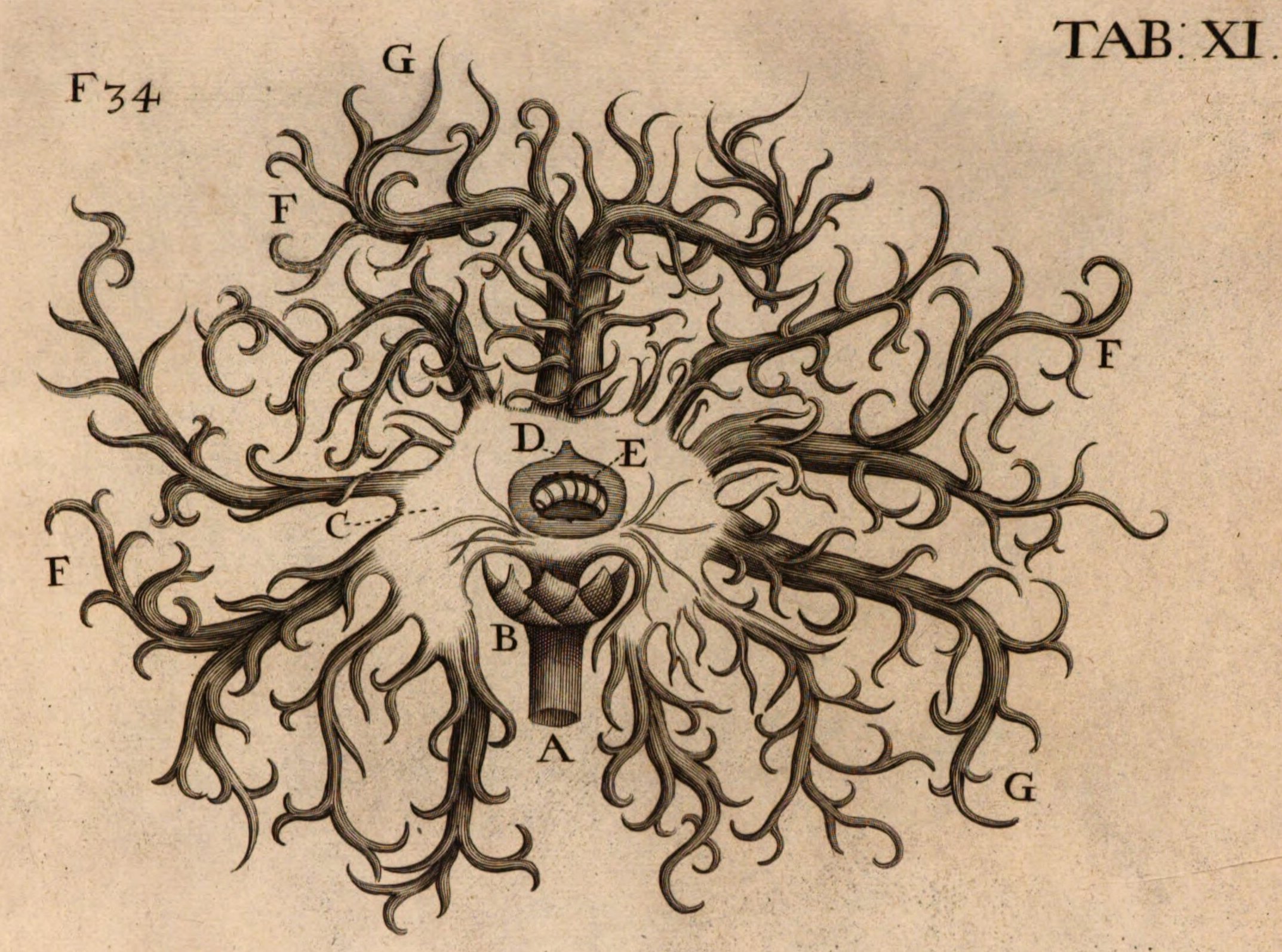
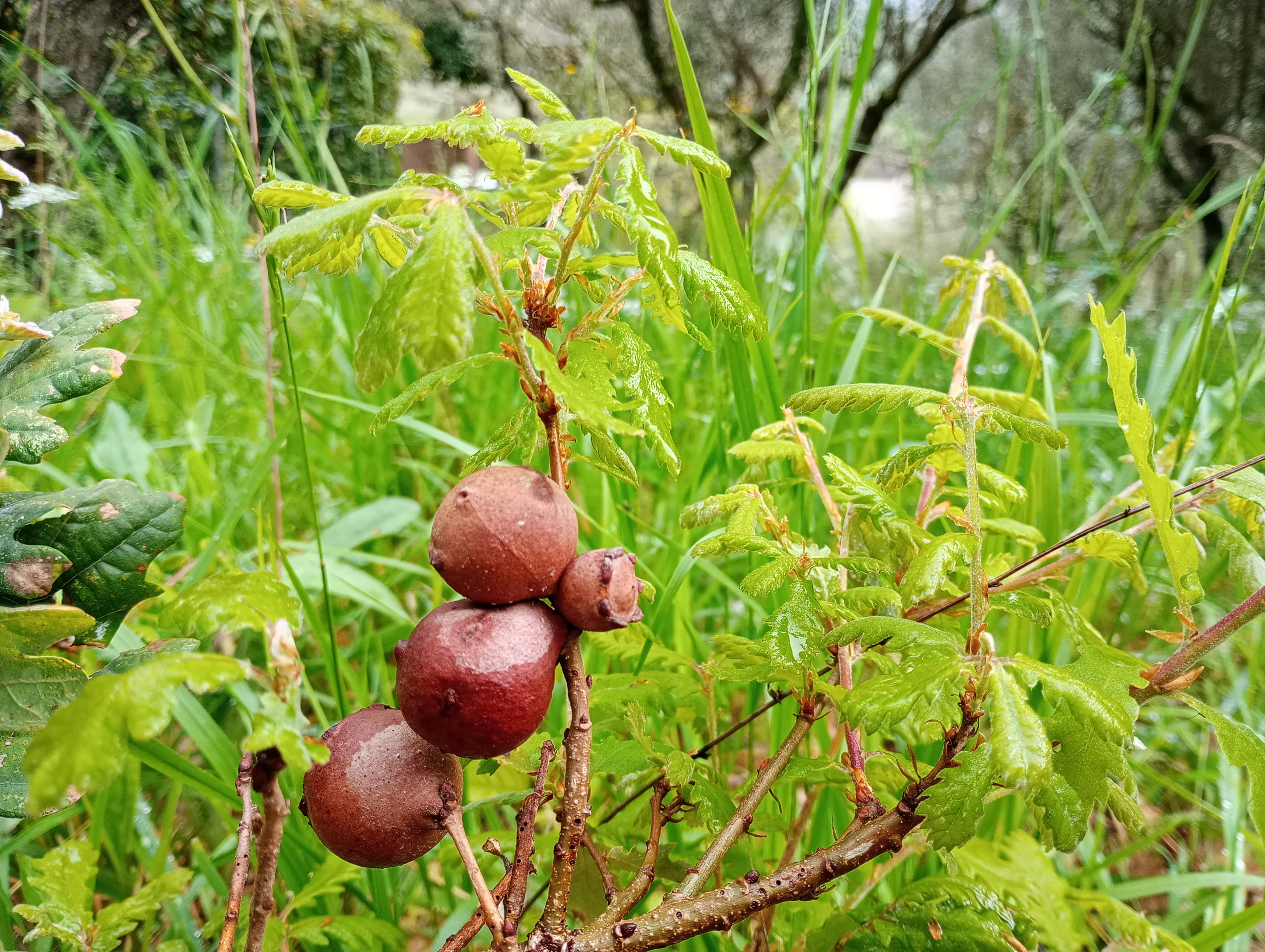
In the scientific literature on plant and animal biology, galls have often been framed as a plant’s response to the activity of insects and other parasites. Although some inducers were classified as harmful, most were understood to cause little or no damage to their hosts. Yet, between the late nineteenth and early twentieth centuries, galls also became objects of systematic observation and collection within extensive networks of naturalists, who investigated them as potential agronomic pathologies requiring surveillance and documentation.
What matters for our discussion, however, is that the organisms involved in gall formation coexist in a variety of ways, for instance bringing together plants, insects, insect parasites, and fungi, whose spores are dispersed through wind or transported by insects. These encounters generate forms of coexistence that exceed scientific attempts to isolate and categorize individual organisms, highlighting the interconnected and relational nature of life. At the same time, these encounters between different species can be highly specific: certain species feed on, inhabit, and interact with particular plants, forming close relationships with their environments and shaping galls in distinct—and often strikingly diverse—forms.
Galls, or cecidia, are not plant anomalies, but resourceful expressions of shared, entangled life. They differ from plant malnutrition or injury. As early as the beginning of the 20th century, naturalists began to recognize that galls were not just morphologically undefined growths or accidental disruptions of plant-insect development. Even though they arise from complex and sometimes unpredictable multispecies encounters, galls display their own structure, organization, and patterned forms of relation. Although they are the visible result of a process of plant tissue mutation involving insects and other living organisms, the mechanisms underlying cecidogenesis (gall formation) still remain unclear.
Some varieties of galls contain high concentrations of tannic acid, which forms when insects meet plants—for instance, oak galls: gall wasps induce the tree to produce these tannin-rich structures, which protect the developing larva. At the same time, tannic acid proves useful to human societies across the world with a material that has shaped technologies of writing, dyeing, tanning, medicine, and craftsmanship for centuries. This insect-plant encounter is therefore of anthropological significance, as galls have long been incorporated into practices that meet human needs. Galls offer a particularly compelling example of how multispecies interactions generate materials with ecological, cultural, and technological value.
In this frame, galls can thus be viewed as economic entities, particularly due to their chemical properties. Historically, tannic acid extracted from oak galls and tree bark was used to convert animal hides into durable leather. The tannins bind to collagen fibers, making the leather more resistant to decomposition. In ink production, tannic acid from oak galls was a key ingredient in iron gall ink for over a thousand years, and in medicine, tannic acid has been used as an astringent to help reduce minor bleeding, soothe irritated skin, and treat stomach bug. These effects are primarily due to its ability to precipitate proteins and inhibit the growth of some microorganisms. Its antioxidant properties may also help reduce oxidative stress and inflammation. Tannins have quietly shaped human activities, weaving together science, technology, and everyday life.
We argue here that galls are no longer viewed merely as objects that fulfill human needs, but rather considered from an epistemological and ecological perspective as opportunities to explore different ways of multispecies coexistence and relationship (
Haraway, 2007). Above all, they encourage engagement in the construction of knowledge about biodiversity, as living beings intertwine with one another.
Galls are communities, where species, genera, families, and kingdoms coexist in various ways, and shape different ecological relationships, which are visible if we observe the multiple expressions of life. For us, this understanding came through long walks in familiar place, in Central Italy, in the Apennines (see Fig. 2), between the regions of Lazio and Umbria—where countless oak trees, among many other plants, and a rich variety of insects, among many other animals, bring life to woodlands, scattered vegetable gardens, olive groves, walnut orchards, and the few remaining cultivated fields. Not far away, in the valley below, a lake reflects the green of mountains that were once bare. These encounters within the geographies of our lives are intertwined with our visits, since 2023, to the herbarium of the
Botanical Museum at the University of Padua. As researchers in the National Biodiversity Future Center, we have been engaged in the historical and anthropological study of natural history collections in Italy in collaboration with botanists, entomologists, and biologists.
While nature has been classified into specific taxonomic categories for centuries, galls as relationships exceed such classification, because they are a curious combination of organisms and cannot be easily reduced to a single entity or an association of two beings.
The classification of organisms carries the traces of these encounters. It reflects not only bodies, structures, and biological traits, but also the ways scientists interpret relationships, assign meanings, and recognize the values that emerge between humans and the natural world. As practices of knowledge-making, classifications become evolving stories of how humans make sense of their place within the web of life, while at the same time marginalizing those living beings that do not fit within dominant categories (Bowker & Star, 1999). Galls demonstrate this complexity because they are places where thresholds blur and where life becomes visible as an ongoing entanglement, negotiation, and exchange.
From this perspective, galls can be understood as boundary objects (
Star & Griesemer, 1989) because they inhabit multiple worlds at once: they are botanical structures for plant scientists, ecological interactions for entomologists, indicators of environmental change for ecologists, objects of economic concern when they affect agriculture, and sites of wonder for promeneurs, among others. Their meaning shifts across communities of practices, yet their presence allows different ways of knowing to converge. In the same way, gall herbaria can be seen as boundary collections where different disciplines and aesthetic interests meet––history of science, natural history, biology, philosophy, and anthropology. They offer a glimpse into the many ways organisms live together and transform within their environments, whether in a forest, a garden, or a museum herbarium.
1. How to Approach a Gall Collection?
Our engagement with galls emerged through the experience with a previously unstudied collection: the gall herbarium assembled by the Italian botanist Alessandro Trotter (1874–1967), a student of Pier Andrea Saccardo (1845–1920), now housed in the Botanical Museum of the University of Padua, Italy (Mandrioli et al., 2024; Beltrame & Tonetti, 2024, 2025). An herbarium constitutes an epistemic infrastructure through which scientific practices, taxonomic traditions, ecological relationships, and institutional histories become entangled.
Galls are primarily preserved in botanical and entomological museums and laboratories, but they can also be found in the collections of agricultural institutes. Regardless of the institution, they inherently require interdisciplinary approaches in order to collect, study and curate them as they are the products of social, historical and interspecies relationships.
When these plant outgrowths enter natural history collections, they become potential sites for interdisciplinary knowledge-making. Gall collections, such as Trotter’s herbarium, require collaborative practices of observation, identification, and documentation that bring together different approaches. Cataloguing entails not only identifying genera, species, localities, dates, and collectors, but also reconstructing the historical trajectories through which these specimens and their associated metadata were produced, circulated, and preserved. In this way, the materiality of biological specimens and the conservation and taxonomic information associated with them are articulated with the social and historical conditions of their production, foregrounding the gall collection where scientific and historical knowledge are continuously co-produced.
Gall collections occupy multiple physical spaces (cabinets, drawers, and boxes) distributed across diverse institutions, including botanical gardens and museum herbaria, entomology departments in natural history museums, and plant pathology collections in agricultural institutes. While embodying collaborative affordances, they remain largely marginalized within the institutions that preserve and care for them. (Fig. 3).
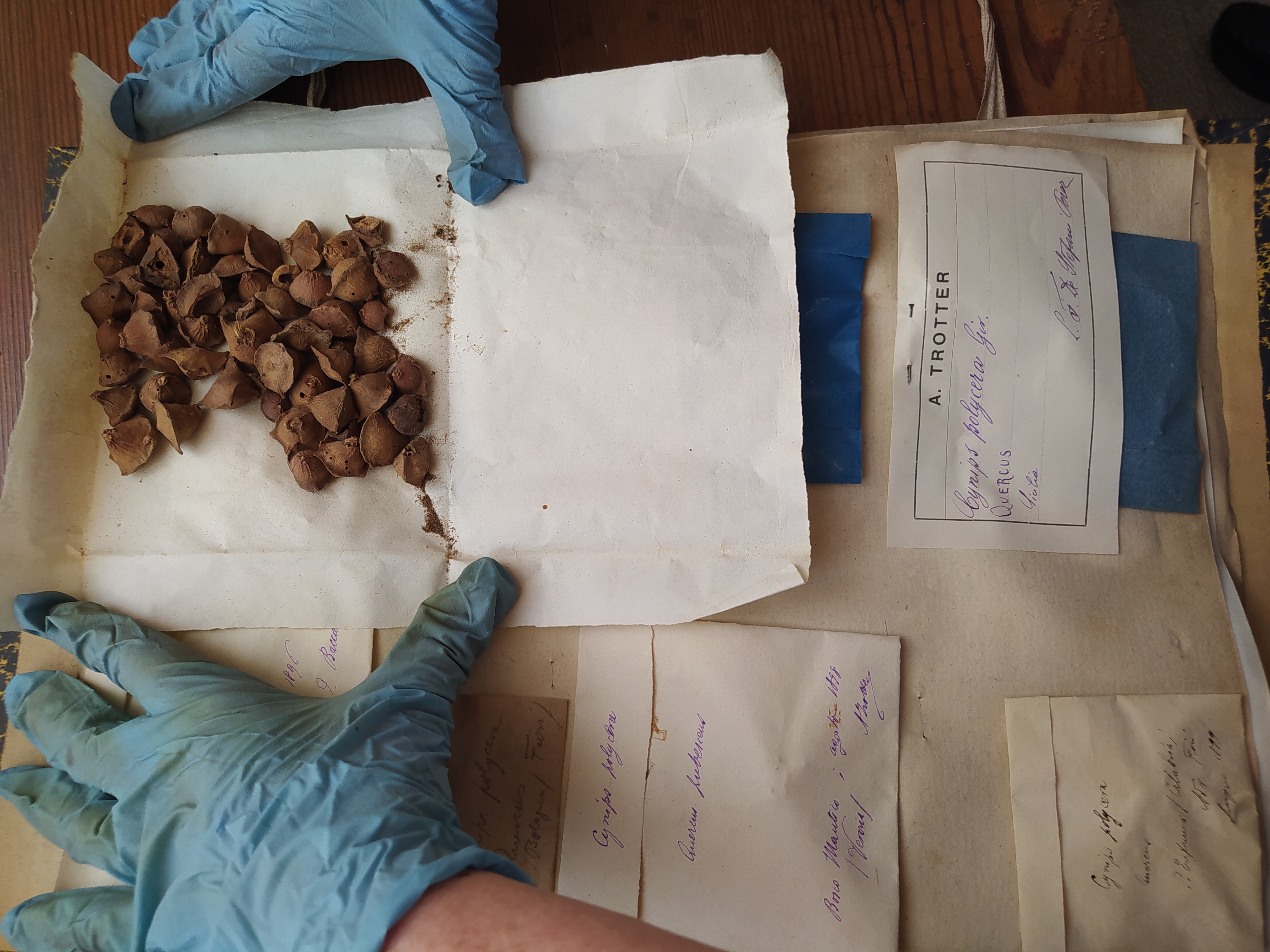 Figure 3. An herbarium sheet from Trotter’s gall collection, with paper envelope opened by Rossella Marcucci, curator of the Botanical Museum. Botanical Museum, University of Padua, Italy, 2023. [Image Credit: Luca Tonetti]
Just like fungi, lichens, ferns, and mosses, galls can be considered “minority taxa,” that is, “taxa that consistently receive a disproportionately small amount of public and curatorial interest on a national or international scale relative to their species abundance and diversity” (
Smith, 2020: 50). In fact, the interdisciplinarity required by a gall collection is difficult to manage in curatorial practices (
Mertz et al., 2022).
Looking at the ecology of conservation practices, studying and cataloguing Trotter’s gall collection raises an intriguing question: could herbaria still be “teeming with life”? In a certain sense, this inquiry has already been articulated in Laurie Palmer’s engagement with lichens, which demonstrates how nonhuman forms of life can exceed human efforts at control and domestication. Her work explores the limitations of practices that seek to isolate, cultivate, and regulate living organisms within environments designed according to human needs and intentions (
Palmer, 2019). The same argument can be extended to dried plant specimens, such as gall collections, which can be understood as “archives” of stories, including those shaped by colonial encounters, as well as biological records that trace the distribution of specimens across different regions. And yet, despite the chemicals used to preserve them, larvae can still be found inside the galls and the herbarium sheets. Are these the insects that formed the galls, their inquilines, or other species that have found their way into this preserved world and now feed on herbarium specimens?
Gall collections, understood as traces of plant-insect domestication processes, reveal temporalities that generate multiple forms of overlap—biological, ecological, and disciplinary. By moving beyond the framework of pest control, these unpredictable presences can be reconsidered not as threats to be eliminated, but as forms of life resurgence. As defined by anthropologist Anna L. Tsing (
2017), resurgence refers to the capacity of ecosystems to regenerate, adapt, and survive through forms of cooperation, even within landscapes and museum environments shaped and disrupted by human activities.
2. Galls as Multispecies Encounters: Shaping Mystery in Ordinary Life
Galls invite us to engage with creative processes––both scientific and artistic––within the ever-changing landscape of life. One example in biodiversity conservation is the development of 3D-printed nests that mimic oak galls, which are inhabited by other arthropods, particularly arboreal ants, after the adult wasp has emerged. Thus, gall-shaped nests could support the presence and diversity of tree-dwelling species, contributing to the restoration of multispecies communities in controlled environments, including agricultural and urban settings (Giannetti et al., 2025).
Italian artist Michele Guido also embraces the mysterious balance of ecosystems. His work reflects the transient architecture of the natural and social worlds by expanding forms through the modular reproduction of gall structures. (Fig. 4).
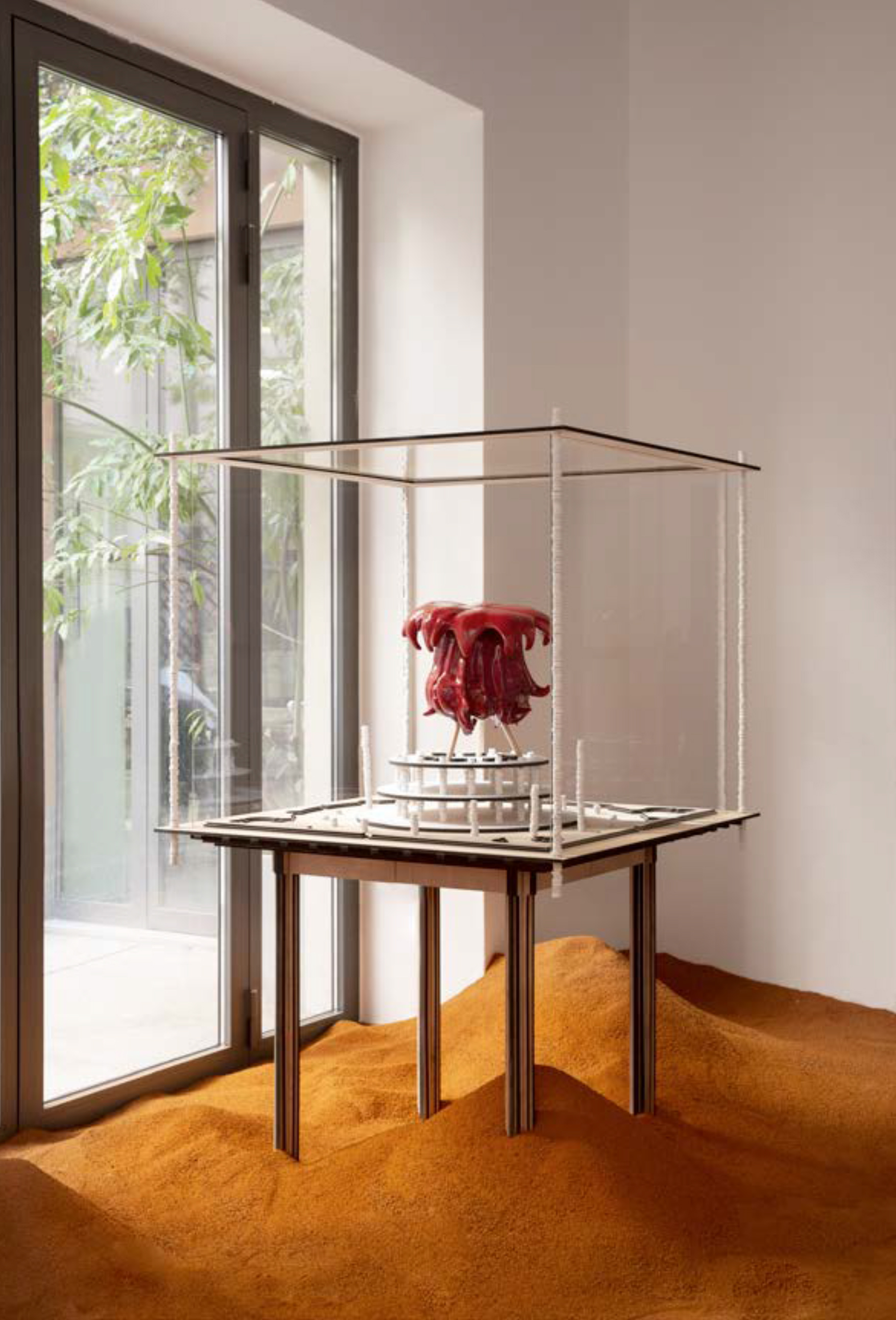 Fig. 4 Michele Guido, parco bibbiani 21.10.17_01.01 _andricus dentimitratus project _2018 Glazed earthenware, vlp 1085 color (Ivana Antonini manufacture, Montelupo F.), direct print on polyester, luxar a.r. glass, okumé plywood, steel, plaster; dimensions: cm 188×107×107. [Courtesy of Fondazione Officine Saffi Archive, Milan; Lia Rumma Gallery, Naples/Milan]
Multispecies encounters take root in the textures of place—in the material arrangements, spatial rhythms, and layered histories through which worlds are continually composed. Fascinated by the transformation of plant tissue that results from the encounter between insect and plant, Guido recreates galls in glazed earthenware. In the work Andricus dentimitratus (the scientific name of a typical gall-forming wasp), the gall rises above the floor plans of ancient architectural structures. Guido’s work attunes us to how multispecies encounters take root in the textures of place—in the material arrangements, spatial rhythms, and layered histories through which worlds are continually composed. Forests, gardens, museums, and herbaria are living ecologies where humans, plants, fungi, insects, and countless other beings meet. Pressed leaves, faded labels, plant fragments, and stories do not merely bear witness to the past; they carry relations forward, inviting new conversations across generations, disciplines, and species. Scientific work, curatorial care, preservation, artistic practices together unfold new questions. Galls, as more than plants, bloom histories of knowledge, memory, and imagination. As multispecies relations, galls are curious, mutant forms of life.
Life is a parasitic and local process, as Michel Serres suggested in the 1980s, in which it is unclear who benefits from whom or who is the commensal (
Serres, 1982). Nevertheless, these encounters produce mutations. Even if organisms continue to be classified separately, the ongoing research challenge is to capture the multiple trajectories of the socio-natural world, in which there is no room for isolated entities. Observing galls helps us to focus on a world in which relationships animate life, rather than considering the action of a body on another. Galls move us away from the concept of enclosed bodies and encourage us to consider them as ever-changing experiences. Relationships are a source of surprise, connecting entities and giving rise to newness.
Tiziana N. Beltrame is a science and technology anthropologist and a research fellow at the University of Padua. She is involved in the National Biodiversity Future Center, studying natural history collections provenance, conservation practices, digital processes, and museum storage in Europe. She is also an associate at the Centre Alexandre-Koyré (EHESS-CNRS-MNHN) in Paris.
Luca Tonetti is a researcher in the History of Science at the University of Padua. His research focuses on the history of early modern medicine as well as natural history collections in Italy. Within the National Biodiversity Future Center, he has worked primarily on botanical collections, exploring the intersections of botany, entomology, and agricultural science in Padua between the late nineteenth and early twentieth centuries.
Edited by Ashton Wesner