Art, Science, and the Many Ways of Knowing the Brain: Workshop Report-Back
Lina Pinto-García | Postdoctoral Fellow | Connected Minds Program, York University
Edited by: Mariana Pitta Lima
09/28/2026 | Report-backs
Two days after the devastating
earthquake that shook
western Colombia, we gathered while still reeling from what had happened and before we had fully grasped the magnitude of its consequences. We met at the
Botanical Garden of Medellín for a long, unhurried conversation about art and brain health. In his opening keynote, Colombian playwright
Fabio Rubiano offered a simple but unsettling image for thinking about the place art can occupy in the face of this and so many other complex and tragic situations in our societies:
"When a building begins to collapse, one person may run, pushing aside anyone they can to save themselves; another may help others before helping themselves; another may freeze, unable to move; another may organize the exits and evacuations; another may record everything on camera. Everyone who survives will tell the story again and again. The way we tell it will show us who we are, what we are made of, and what kind of society we belong to. And that is uncomfortable."
And so the tone was set. What brought us together was an interest in thinking about art and creative practices beyond their therapeutic potential and their capacity to contribute to better understandings of neurological conditions, benefiting brain health. We were interested, above all, in art’s power to hold up a mirror to us and, through creativity and invention, help us understand the brain and neurology differently. “Reality is badly written, but it is what it is. And we are experts in fiction,” Rubiano said. “And sometimes fiction helps, not by allowing us to take refuge in a universe removed from reality, but quite the opposite: by using fiction as a mechanism for seeing reality from a different perspective, one that no one else uses,” he added.
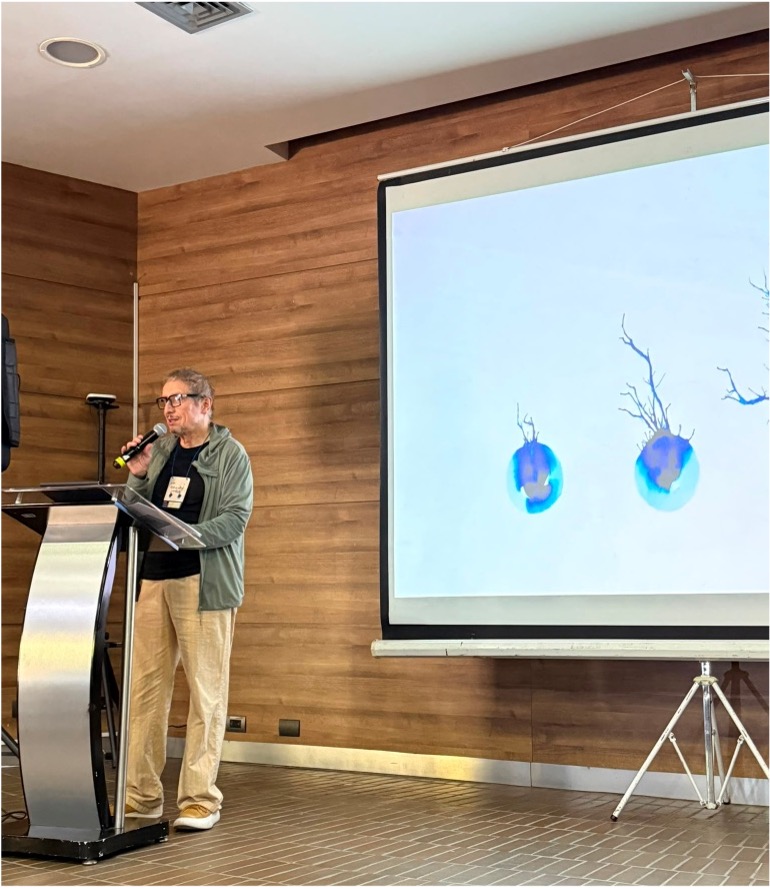 Figure 1. Keynote lecture by Colombian playwright Fabio Rubiano (Petra Theater). [Image credit: Author]
Held on August 12 and 13, 2026, the gathering brought together social scientists, humanities scholars, health professionals, scientists, and artists interested in challenging normative conceptions of the brain. Following the call from Science and Technology Studies (STS) to rethink the relationship between neuroscience and the humanities, we sought to foster collaborations that could move beyond disciplinary compartments (
Fitzgerald and Callard 2015). Our aim was to explore how different forms of knowledge, practice, and experience might broaden the ways in which brain health is understood, investigated, and cared for. In particular, we were interested in the potential of artistic practices to make visible dimensions that escape clinical and scientific frameworks—sensory experience, affective worlds, disruptions in time, and embodied forms of care—and, from there, to open up other ways of thinking about brain health. Art and science thus emerged as forms of knowledge production that, through hybrid and collaborative practices, can question and reconfigure the boundaries that have traditionally separated them (
Rogers and Halpern 2021). The full program, including the sessions, participants, and workshops, can be found
here.
The event was organized by
Lina Pinto-García and
Denielle Elliott as a follow-up to
Between Alzheimer’s and War,
a research project based at York University, Canada, and supported by the
Connected Minds program, with logistical support from
Jorge Daza. Focusing on the work of the
Neuroscience Group of Antioquia (GNA), a biomedical research group at the University of Antioquia in Medellín, the project explores the relationship between the political and historical imperative to remember the violence associated with the armed conflict in northern Antioquia and the intimate struggle not to forget in Alzheimer’s disease. The research takes place in several communities in northern Antioquia, a region home to the world’s largest known family affected by hereditary Alzheimer’s disease. The gathering grew out of this broader inquiry, extending its questions into a collaborative space where art, science, and the humanities could encounter one another.
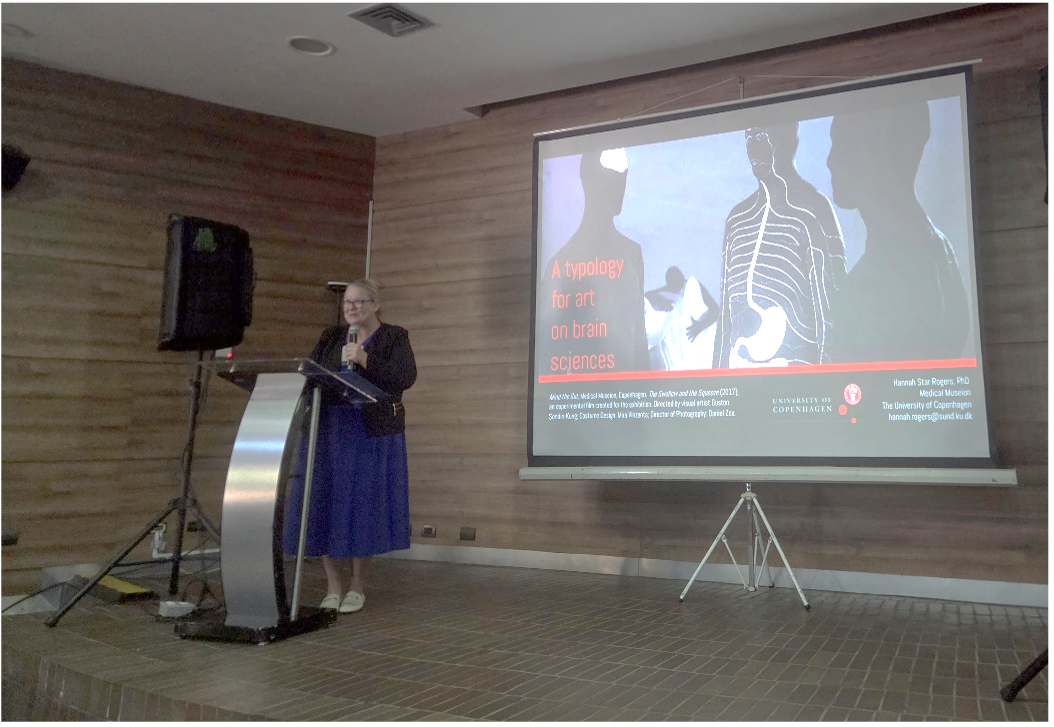
Hannah Star Rogers, our second keynote speaker, invited us to think of this encounter between art and science as a “journey back to the future”: a return to a more holistic understanding of health, in which body, mind, community, and environment are interconnected, while bringing this perspective into conversation with contemporary neuroscience. Drawing on STS and Art, Science, and Technology Studies, she emphasized that “art is not simply an illustration of scientific discoveries. It is a mode of inquiry in its own right.” Artistic practices, she suggested, can make invisible systems visible, question assumptions, and help us imagine alternative futures for healthcare and society.
Figure 2. Keynote lecture by STS scholar Hannah Star Rogers (University of Copenhagen) [Image credit: Author]
Across the two days, these questions took different forms through workshops, film discussions, academic presentations, and roundtables. We considered what it means to live with a changing brain, from hereditary Alzheimer’s disease to the effects of concussion and other forms of neurological disability. We explored how music, movement, performance, film, and life writing can offer ways of attending to experiences that are difficult to capture through clinical language alone. In the workshops, participants experimented with co-creative and participatory approaches, asking how knowledge might emerge through the body, the senses, relationships, and the environments in which care takes place. Presentations and roundtables, meanwhile, raised broader questions about neuroscience itself: how scientific knowledge is produced, whose experiences and forms of expertise are recognized, and what happens when scientists, clinicians, artists, caregivers, and people living with neurological conditions become part of the same conversation.
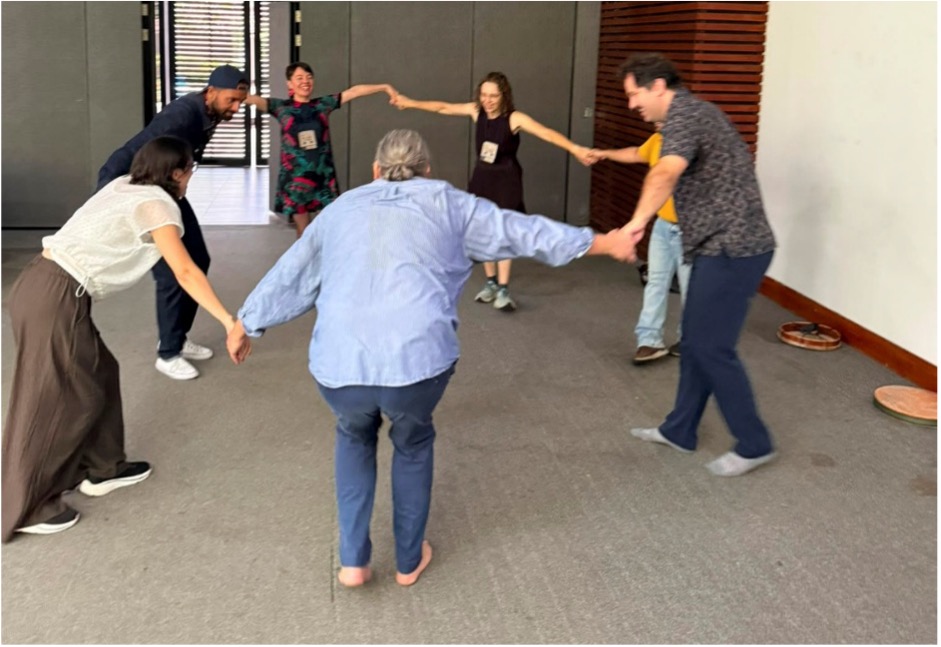 Figure 3. Workshop facilitated by Catherine Correa (Global Brain Health Institute / GNA) [Image credit: Author]
One of the workshops, led by
Catherine Correa Lopera, brought us through sound and music to Chocó, the region at the epicenter of the earthquake that was still weighing heavily on us. She asked us to imagine the sound of waves breaking on the shore in a place where the rainforest and the sea meet so closely that one can hear the forest from the water. Then she invited us to recreate those sounds with our own bodies. One by one, with our eyes covered, we were asked to move through the room without fear, guided by the sounds of the forest made by the other participants, who helped us avoid the walls and objects around us. For a moment, we became the sea and the forest; frogs, toucans, monkeys, jaguars, whales, crabs, and cicadas. For a moment, our bodies and our hearts seemed to attune themselves to the peace that Chocó—and so many other places in Colombia—so desperately needed in those days.
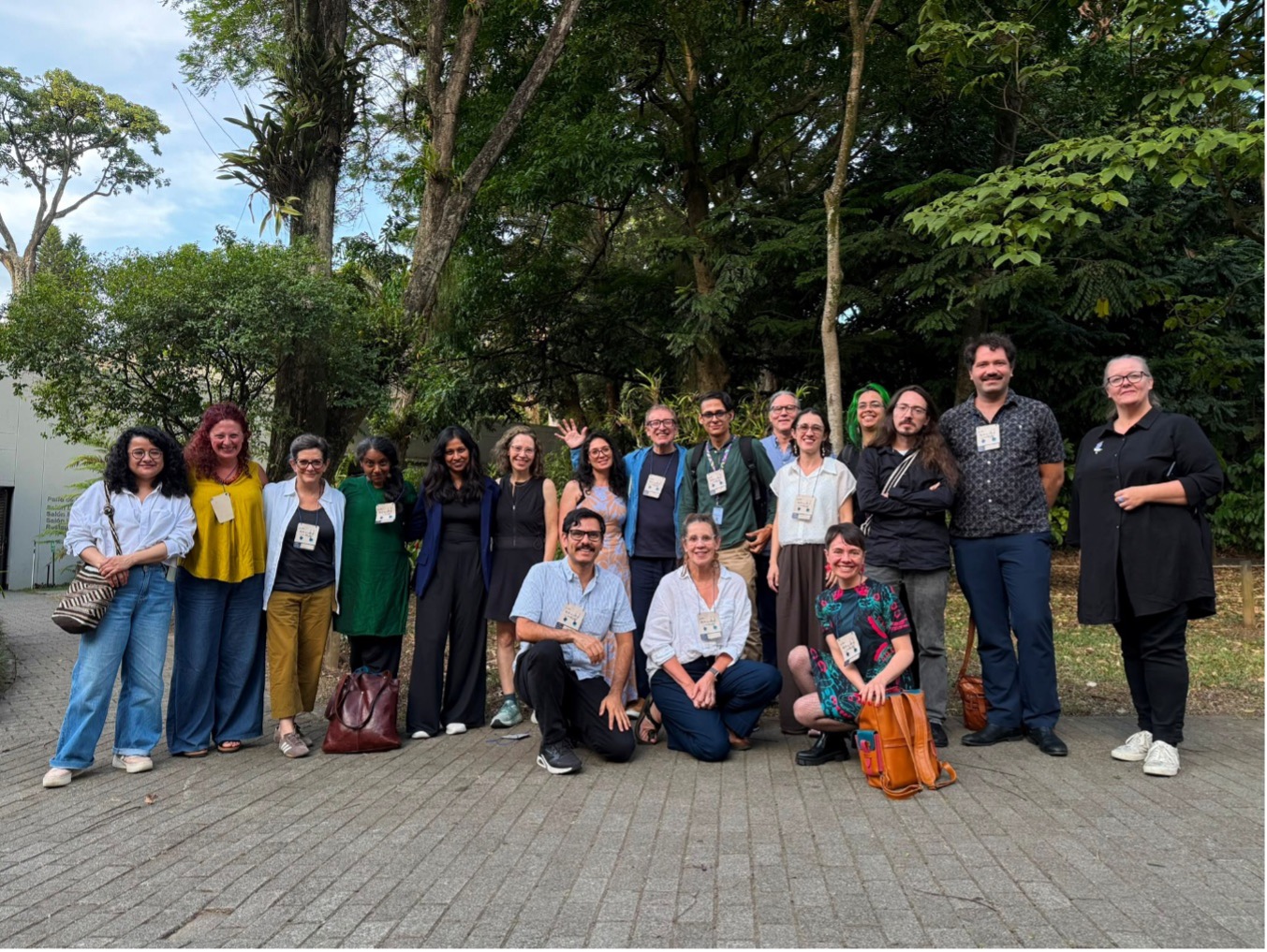 Figure 4. Photograph of some of the event participants [Image credit: Author]
References
Fitzgerald, Des, and Felicity Callard. 2015. “Social Science and Neuroscience beyond Interdisciplinarity: Experimental Entanglements.”
Theory, Culture & Society 32 (1): 3–32. doi:10.1177/0263276414537319.
Rogers, Hannah Star, and Megan K. Halpern. 2021. “Introduction: The Past, Present and Future of Art, Science, and Technology Studies.” In
Routledge Handbook of Art, Science, and Technology Studies, edited by Hannah Star Rogers, Megan K. Halpern, Dehlia Hannah, and Kathryn de Ridder-Vignone, 1–46. Abingdon: Routledge.
Lina Pinto-García is a postdoctoral fellow in the Connected Minds Program at York University (Canada). Her research sits at the intersection of medical anthropology and STS, drawing on ethnography to examine how human-nonhuman encounters become pathological and the social contexts in which biomedical knowledge and pharmaceutical technologies are produced. She is particularly interested in how armed violence and its historical legacies shape health outcomes and the understanding and management of disease in Latin America, with a focus on Colombia. Her research has examined the relationship between Colombia’s armed conflict and vector-borne diseases, as well as the effects of illicit crop production and conflict on ecosystems and rural health. She is the author of
Maraña: War and Disease in the Jungles of Colombia (University of Chicago Press, 2025), translated into Spanish and
published by Ediciones Uniandes and ICANH. The book received ESOCITE’s Amílcar Herrera Prize. Her current project explores how emerging pharmaceutical technologies for Alzheimer’s prevention intersect with personal, familial, and collective memory in northern Antioquia, Colombia.
Published: 09/28/2026