
Data Sprint: Algorithmic tactics: empowering platforms workers through collaborative data visualizations
Oscar Javier Maldonado, Derly Yohanna Sanchez-Vargas
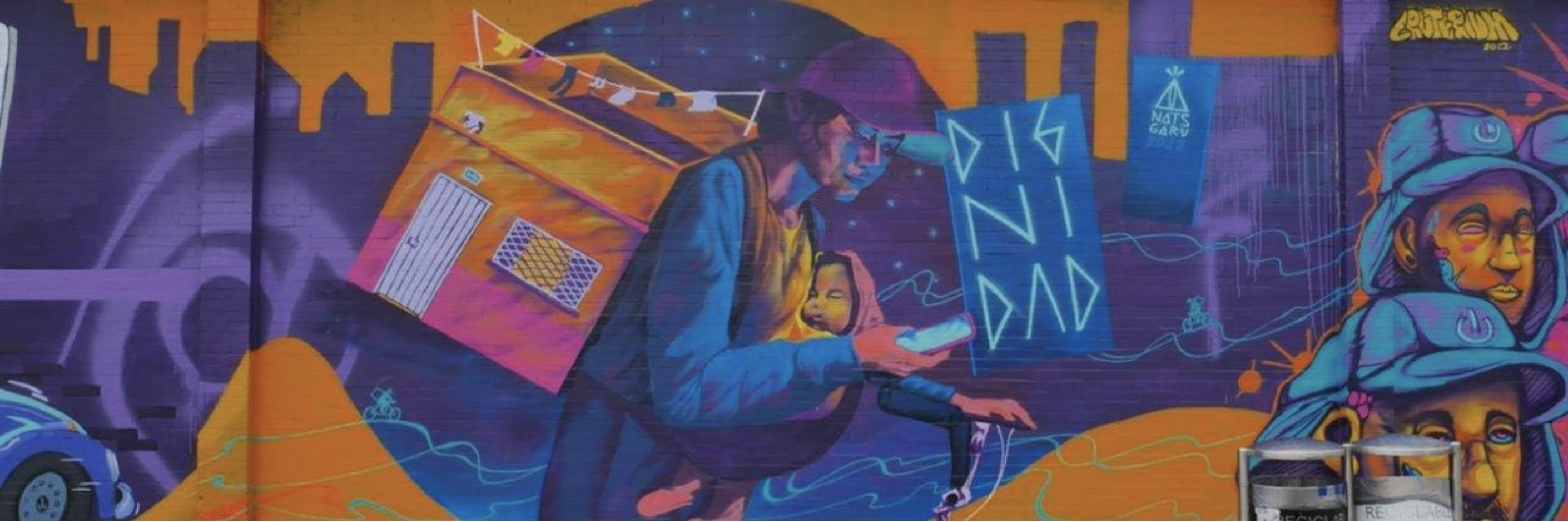
Data Sprint presents the results of the action research project Fairwork. The project presented a robust model of civic engagement with gig workers, unions, and labor activists to raise awareness about the precarious conditions of platform economy workers in Colombia and as part of a broader international endeavor for fair platform work globally. Embedded in questions of urban ecology and visualization, as well as remaking the city from below, it showed how reverse engineering algorithms can become strong techno-social instruments of resisting extractive platform economies. The jury appreciated the project’s clarity, intellectual as well as social commitments, scalability and for its commitment to labor rights of digital gig workers locally as well as globally.
Community Archivists: Using Archives as a Method to Evidence Harm Reduction
Dan Kabella, Anthony DiMario, Kelly Ray Knight, Polina Ilieva, Edith Escobedo
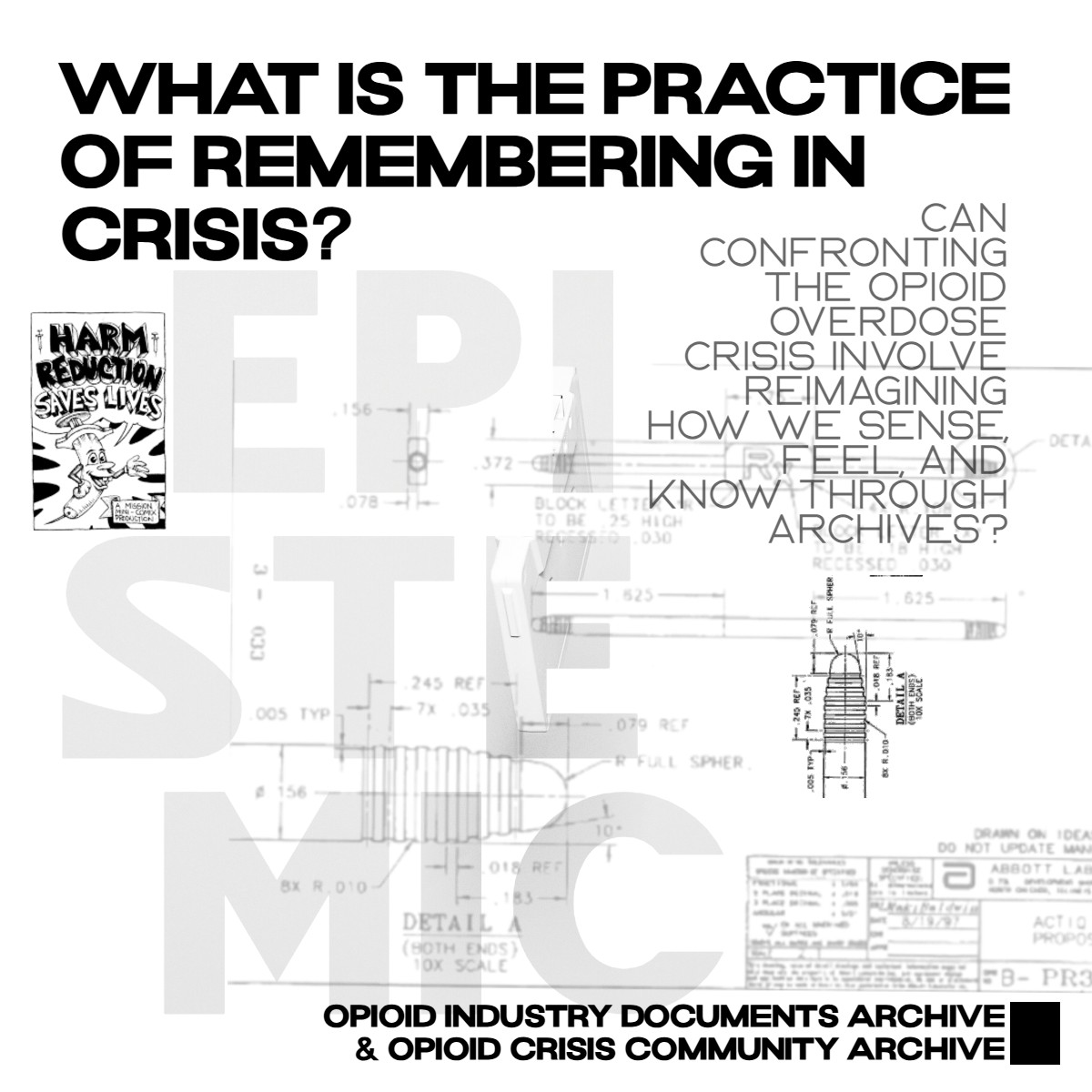
Community Archivists engages archival materials from five organizations key to developing harm reduction strategies in the San Francisco Bay Area during the late 1980s and 1990s. Based on a 2025 workshop, the installation highlighted how drug user experts create evidence-based harm reduction interventions located in lived experiences and reproduced through mediums like operas, zines, letters, photographs, and interactive timelines. The jury welcomed the authors’ emphasis on who gets to produce relevant knowledge on critical issues such as opioid consumption, as well as its materially engaging and tangible artifacts presented at the Exhibition.
Toxic Speculations: Feeling with Pollution through Tangible Embodied Design
Sylvia Janicki
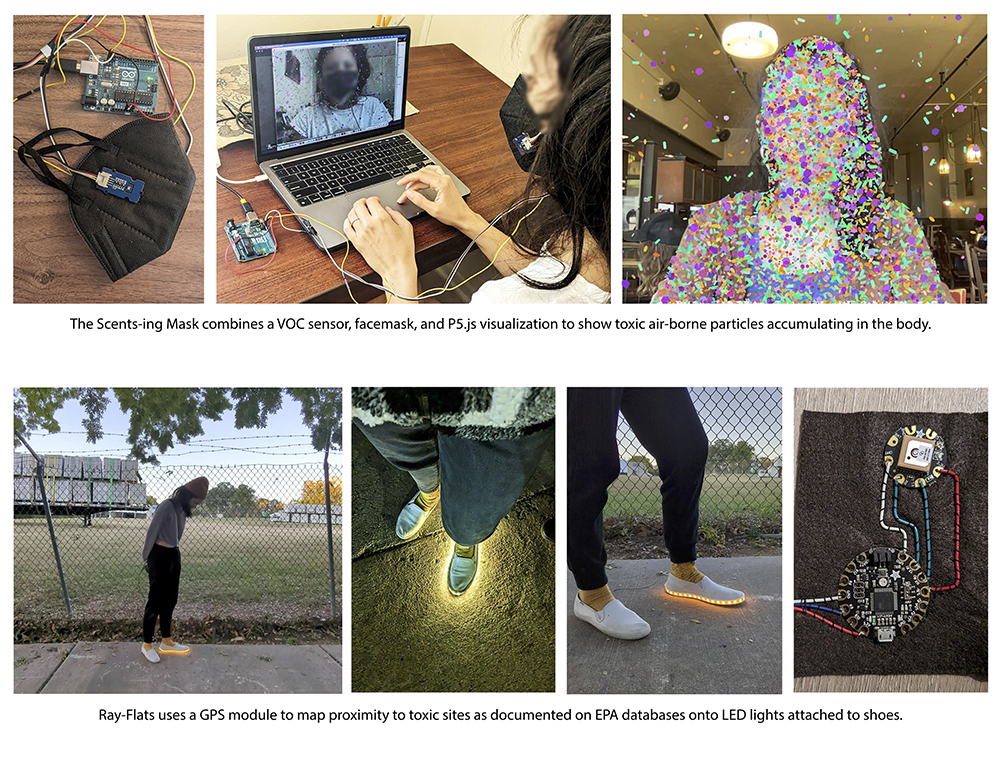
In Toxic Speculations, Sylvia Janicki presented two interactive wearable artifacts, combining sensors and data, with tangible embodied design to think and feel with pollution. The artifacts’ design draws on environmental illness narratives (Chen, 2011; Alaimo, 2010; Murphy, 2006) to explore toxicity as a theme for blurring the boundary between land and human bodies. The two artifacts – a facemask and a shoe – act as an embodied environmental interface, in which environmental sensors are worn on the body to prompt reflections on pollution in our everyday lives while unpacking the unequal body burdens and structures of power in embodied experiences of pollution. The jury welcomed the project’s multi-layered combination of method and theory through an interactive and personal representation.
Life Signatures: Communicating Planets (Workshop)
Kate Genevieve
The workshop Life Signatures presented a passionate and engaging reflection on the politics of earthly and unearthly media. By raising pressing questions about the planet’s present and possible future through speculative imaginations of a world where marginalizations were reproduced across animate and inanimate beings, it showed how an obsession with the extra-terrestrial often comes at the cost of the terrestrial. The workshop simultaneously emphasized the role of media in an era marked by post-truth and misinformation. The jury appreciated its engaging format that included workshop participants through plural and collective decision-making, demonstrating how creative practice can be a speculative and political tool that bridges the gap between theory and practice.
2025 M&D Awards Committee
Xan Chacko (Brown)
Laura Forlano (Northeastern)
Cindy Kaiying Lin (Georgia Tech)
Jim Malazita (RPI)
Tania Perez-Bustos (National University of Colombia)
Mehak Sawhney (University of Colorado Boulder)
Verónica Uribe del Águila (RPI)
Committee Chairs: Shiv Issar, Yana Boeva
Invisible Machines
Yelena Gluzman
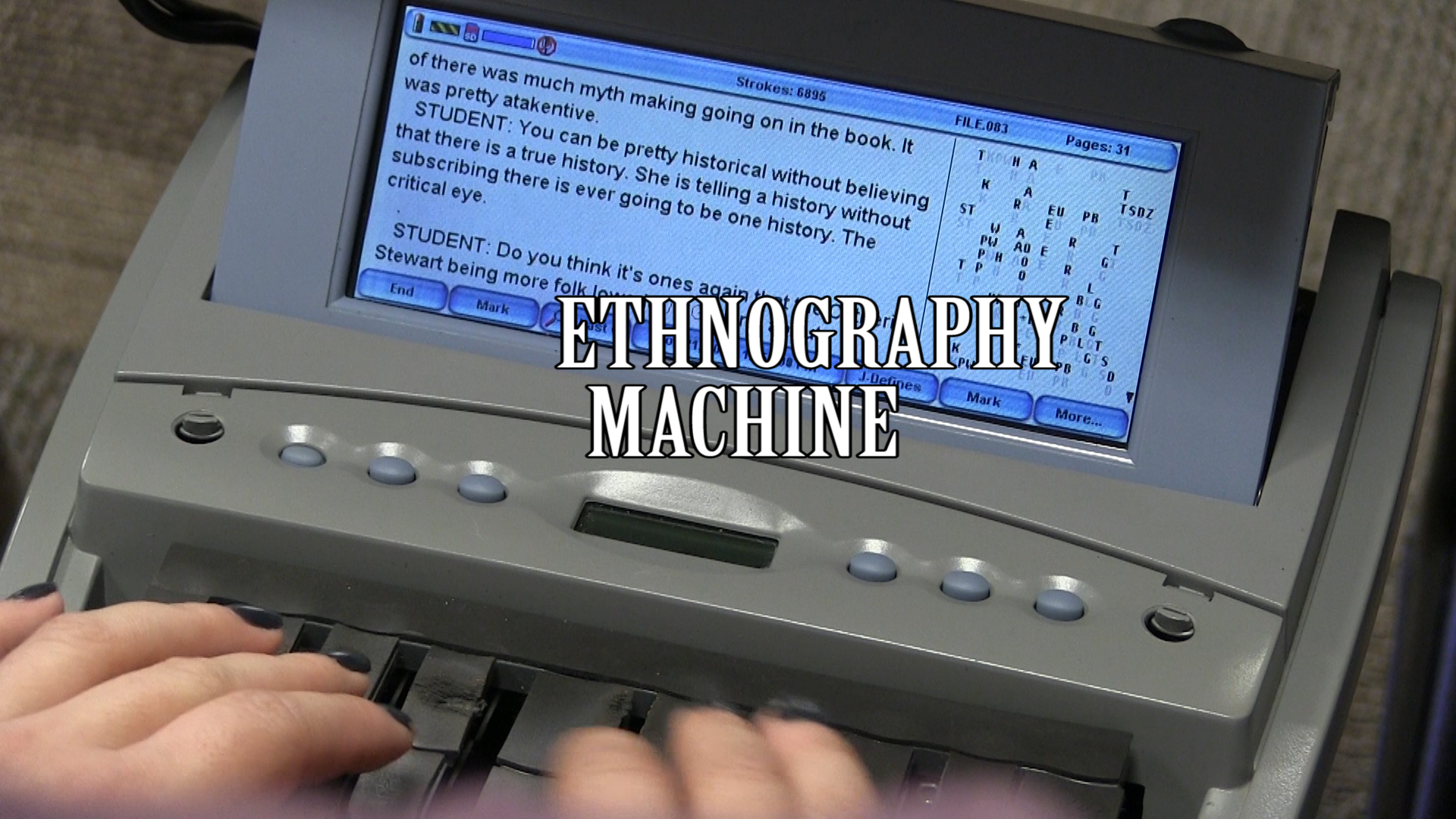
Invisible Machines is an experimental ethnographic film (24 mins) exploring the history and contemporary everyday of stenographers who transcribe classroom speech to text in real time for d/Deaf students. Bringing together histories of feminized labour with ethnographic scenes of contemporary captioners at work, the video considers how captioners and their clients make sense of demands for invisibility, neutrality, and access. By interrupting the normative coherence of sound and image, the film reflexively interferes in its own audio to make the nuanced interpretive work that goes into transcribing across modalities palpable to a viewer.
The film jury commends this work for its innovative blend of experimental creativity and incisive exploration of STS themes, offering an immersive portrayal of the nuanced relationship between students and stenographers. By illuminating the dynamics and implications of voice-to-text technology, it effectively compels viewers to empathize with those reliant on such systems. The film’s evocative power and thought-provoking narrative make it a standout piece deserving of recognition.
Comida Como Resistencia
Keitlyn Alcántara
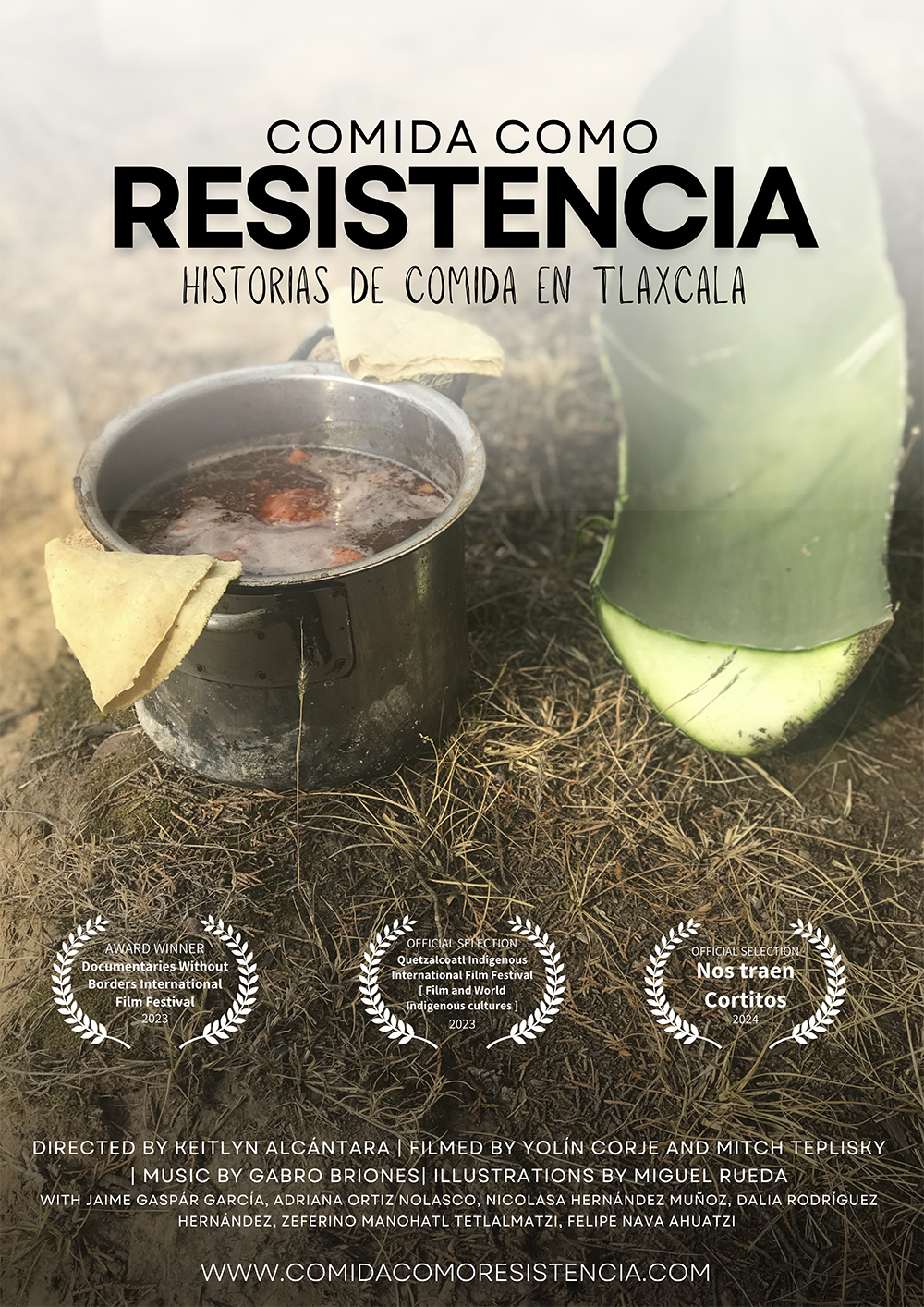
Set in Tlaxcala, Mexico, a tiny state with a legacy of resistance, the documentary short (27 mins.) Comida Como Resistencia presents archaeology as a key tool for remembering food histories that predate capitalist, colonial worldviews. In the late 1400s, the expansive Aztec Empire encircled Tlaxcala, cutting it off from trade – yet it remained an anomalous blip of defiance. The short film follows the stories of crop growers, farmers, traditional chefs, and an archaeologist in four chapters. Combining dietary isotope analyses with oral history interviews, the director arranges them with a self-exploration as a Mexican-American archaeologist, seeking an alternative to the emotionally distant and isolated academic world, and an identity fragmented by colonialism.
The film jury lauds this documentary for its insightful integration of themes such as indigenous knowledge, archaeological research, agricultural sciences, and the sustenance of culture in Tlaxcala. By connecting these themes to contemporary diets and cultural practices through interviews and demonstrations, the film offers a compelling exploration of knowledge production through its multidimensional approach to topics like Mesoamerican cuisine and the interplay between nature and culture.
Film Awards Committee
Patricia Alvarez Astacio (Brandeis)
Lauren Berliner (UW Bothell)
Ranjodh Singh Dhaliwal (University of Basel)
Shiv Issar (Krea University, 4S Council)
Verónica Uribe del Águila (RPI)
Committee chair: Yana Boeva